


After reviewing many people’s experiences in preparing for the Hong Kong Dental Licensing Examination (HKDLE), an interesting phenomenon emerged:
The most talked-about topic is Part 1 (written test), with various materials for sale, study notes, and tips for exam preparation.
There are also discussions on Part 3 (clinical interviews), including case analysis and diagnostic logic.
Part 2 (Practical Exam) is rarely discussed in detail.
It’s not that I don’t want to talk, but I really don’t know what to say.
The official website lacks past exam papers, mock tests, and scoring rubrics. You only know that the exam covers five major areas—”Pediatric and Orthodontic Dentistry, Restorative Dentistry, Endodontics, Periodontics and Dental Public Health, and Oral and Maxillofacial Surgery”—but the specifics of how it is administered and evaluated are left to a vague statement: “Assessing the dexterity and professional competence of candidates through hands-on tasks.”.
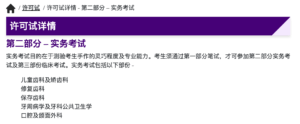
But if you actually take the time to read those paragraphs on the official website word for word, you’ll find that everything worth saying has already been said.
First, the difficulty of the exam location has already been told to you.
The practical examination is usually held at Philip Dental Hospital
What is Prince Philip Dental Hospital? It is a teaching hospital of the Faculty of Dentistry at The University of Hong Kong and one of the top dental training institutions in Asia. Its equipment, instruments, and operational standards represent the benchmark for dental practice in Hong Kong.
Placing you in that environment, testing you with their tools, standards, and processes is itself a form of screening.
Second, infection control is not an extra question but a mandatory one.
The official website states: “In all simulated clinical tests of the practical examination in Part II, candidates must adhere to established aerosol prevention measures and general infection control procedures. Candidates are required to wear personal protective equipment during the examination… Any violation of infection control procedures may affect the final examination score of the candidate.”
From the moment you put on your gloves, every action falls within the scoring criteria. How to pass instruments, how to handle sharps, how to prevent aerosols, and how to clean up after the procedure—these are not “bonus questions” after the exam, but integral parts of the operation.
When preparing for exams, pay attention: Do you practice these at home?
Third, the head model needs to be adjusted in position.
When operations involve the head model, it must be adjusted to a position that ensures patient safety and closely resembles the real-world environment for use. This element will constitute part of the examination assessment
What does it mean? During regular practice, the model is placed casually. But in the exam setting, it’s essential to simulate the actual patient’s posture. The head must be tilted at a certain angle, the mouth opened to a specific degree, the most convenient operating position, and the placement of the saliva suction tube to avoid obstructing the view. All these details count toward the score.
Fourth, you may be interviewed orally.
Some subjects may include oral examinations
R1: “Diabetes” must be translated as diabetes. Original: Don’t assume that just burying your head in work will suffice. Halfway through, the examiner might suddenly ask, “Why are you preparing this way?” “If the patient has diabetes, would you adjust the plan?” Translation:
It’s not just about dealing with teeth; you’re dealing with the examiner.
So what exactly does Part 2 test?
Test whether you can prepare the teeth according to Hong Kong standards using unfamiliar equipment in a strange environment, while maintaining proper infection control, adjusting the patient’s position, and anticipating potential questions from the examiner.
This is not something that can be done just by being able to do it. It is something that requires meeting others’ standards and getting it right the first time.
How should we prepare? The official website doesn’t mention it. But based on our experience of guiding students over the years, we’ve summarized a few key points:
First, take infection control seriously during practice. Every step—how to wear gloves, how to place instruments, and how to handle them after use—must follow the exam standards. Habits developed during practice won’t suddenly change under exam conditions.
Second, practice with different instruments. The equipment at Philip Dental Hospital may differ from what you usually use. If possible, try various handpieces and drills of different models to adapt to the “strangeness.”.
Third, after practicing, have someone review it. Practicing a hundred times by yourself is not as effective as someone else pointing out flaws. Whether the angle is correct, the depth is sufficient, and the edges are clear—these details can become numb to your own eyes over time, requiring a third pair of eyes.
Fourth, practice “answering questions” while practicing. Think about how to respond if the examiner asks why you did something while performing the task. Connect the operations with the logic, and once you’re well-practiced, you won’t stumble during the exam.
The Part 2 course of CHENG HEI Education follows these guidelines.
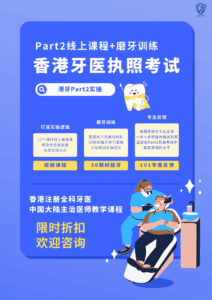
After completing 12 video lessons and 30 grinding drills, your hands will be repeatedly refined. By the end of the practice, the moment you pick up the tools, your mind will instantly know: what to do next after this step; from which angle the examiner will assess me after this step.
This is what we understand as the “practical exam.” Backend inquiries about our time-limited discount for the Part 2 course.