


When preparing for the Hong Kong Dental Licensing Examination (HKDLE), many candidates encounter a common issue: they read the textbooks, memorize the key points, but struggle to integrate their knowledge when solving case-based questions.
The issue may lie in the method of review—we often “read books” rather than “disassemble them.” The former involves linearly absorbing information, while the latter entails establishing logical connections between knowledge points.
Starting this year, we have attempted to do something: breaking down the commonly used reference books for the Hong Kong Dental Practitioner Licensing Examination book by book, extracting the core framework, knowledge structure, and exam preparation value of each book. We hope this can serve as a reference for fellow peers preparing for the same exam.
The first selection is a classic textbook in the field of pediatric dentistry:
《Handbook of Pediatric Dentistry》
Angus C. Cameron / Richard P. Widmer
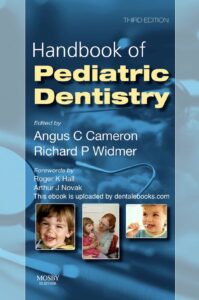
What is this book about?
If summarized in one sentence, this book addresses a core question: what is the specificity of pediatric patients, and how do these specifics influence clinical decision-making.
Compared to adult dentistry, pediatric dentistry has several fundamental differences in diagnostic and treatment logic:
First, the dynamic nature of growth and development.
Children are in a continuous stage of growth and development, with their dentition progressing from primary dentition to mixed dentition and then to early permanent dentition. Each stage has distinct anatomical characteristics, disease manifestations, and treatment objectives. Dental caries in children often progresses more rapidly than in adults, and the mineralization and tooth structure of primary teeth differ from those of permanent teeth, which directly influence treatment plans and endodontic strategies.
Second, the particularity of behavioral management.
Children have not yet developed an understanding of the medical environment and are prone to anxiety in unfamiliar settings. This means that in pediatric dentistry, technical skills are only part of the treatment process, while behavior management is an equally crucial clinical competency. How to complete treatments safely and establish doctor-patient cooperation tailored to different age groups serves as the central theme throughout the book.
Third, the combined influence of family and social factors.
Pediatric oral diseases are often closely related to overall health, family environment, and lifestyle habits. A child’s dental caries issue may not solely stem from oral hygiene but also be connected to dietary patterns, frequency of sugary beverage consumption, and family oral health management practices. Therefore, pediatric dental assessments encompass not only the teeth themselves but also medical history, developmental status, and family behavioral patterns.
From a preparation perspective, what is the value of this book?
It provides not isolated knowledge points, but a comprehensive clinical framework for pediatric dentistry.
The content in the book is systematically organized into a continuous clinical logic
Starting with the Child Assessment,
to Behavior Management
Prevention of Caries
Pediatric Restorative Dentistry
Pulp Therapy for Primary and Young Permanent Teeth
Dental Trauma Management
There is a clear logical connection between each section.
During the first preparation phase, many people tend to make a common mistake: piecing together fragmented pediatric dentistry knowledge from various textbooks. As a result, they memorize the concepts but struggle with case-based questions due to a lack of a cohesive framework.
For instance, when encountering a case of multiple caries in a young child, factors such as the patient’s cooperation level (behavioral management), the progression speed of caries (growth and development characteristics), family dietary habits (social factors), and the selection of restorative materials (milk tooth properties)… must be considered simultaneously. These assessments are not isolated but require comprehensive decision-making within a holistic clinical framework.
The value of this book lies in helping you establish this framework.
How do I dismantle it next?
We will systematically organize the core content from the book, focusing on one knowledge module per session while reviewing and recording key areas commonly tested in the Hong Kong Dental Council Licensing Examination.
The next section will start with “Child Assessment.” This part serves as the foundation for all pediatric dental treatments and is often overlooked during reviews but remains crucial for clinical decision-making.
If you are also preparing for pediatric dentistry or have your own insights about this book, feel free to share in the comments.
CHENG HEI Education · Exam Preparation Book List Breakdown Series
Next Issue Preview: Child Assessment in Pediatric Dentistry