


In the previous issue, we discussed the overall framework for assessing pediatric dental patients. In this issue, we have entered the core and most easily singled out part of the Hong Kong Dental Licensing Examination: Caries Risk Assessment for Children.
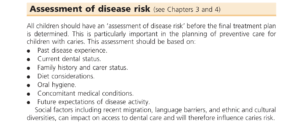
In the patient assessment chapter of this book, the emphasis is on how to determine whether a child is more likely to develop dental caries in the future.
This is not a matter of having any illness now, it is a matter of whether one will get sick in the future. In pediatric dentistry, this judgment is often more important than current treatments.
What is dental caries risk assessment?
The definition given in the textbook is very clear: caries risk assessment is a predictive assessment process, whose purpose is not to describe the current oral condition, but to determine the probability of future caries occurrence and adjust prevention and treatment strategies accordingly.
This is particularly crucial in pediatric dentistry, as dental caries in children have two significant characteristics: rapid progression and the formation of cavities from early demineralization, which may be much faster than in adults. The recurrence rate is high, and once it enters a high-risk state, the difficulty of subsequent management will significantly increase
Therefore, in pediatric dentistry, risk assessment is not an optional step, but a prerequisite for all treatment decisions.
Evaluate what? The seven dimensions are indispensable
The textbook emphasizes that dental caries risk assessment needs to integrate multiple dimensions rather than relying on a single indicator.
1. History of previous dental caries
This is one of the strongest predictive factors. Children who already have dental caries or a history of filling have a significantly increased probability of developing dental caries again in the future. A child with a history of multiple fillings, even if their current oral condition is good, should be classified as a medium to high-risk population.
2. Dietary structure and frequency of eating
Compared to total sugar intake, frequent intake of sugary foods or beverages has a greater impact on the risk of dental caries, especially during nighttime or prolonged exposure.
Common high-risk behaviors among children include frequent consumption of sugary drinks, falling asleep with milk, and excessive snacking.
These behaviors repeatedly disrupt the balance between demineralization and remineralization in the oral cavity, causing the tooth surface to remain in an acidic state for a long time.
3. Oral hygiene condition
Children who brush their teeth irregularly, do not use fluoride toothpaste, or lack exposure to other fluoride compounds have significantly reduced remineralization ability on their tooth surfaces, making them more prone to early caries. At the same time, the level of plaque control directly affects the development speed of dental caries – the more plaque accumulates, the more active the metabolic activity of cariogenic bacteria.
4. Exposure to fluoride
Fluoride is currently the most well-documented method for preventing dental caries. Children who lack fluoride exposure (such as not using fluoride toothpaste, drinking water without fluoride, and not receiving professional fluoride application) will have significantly lower acid resistance in their enamel compared to their peers who have sufficient fluoride exposure.
5. Family and Care Environment
This is a very unique dimension in pediatric dentistry. The oral health status of parents, their level of attention to oral hygiene, and their daily supervision can directly affect children’s behavioral patterns.
The textbook clearly states that childhood dental caries often have family clustering characteristics. This means that the risk assessment of an individual patient cannot be judged without considering their family background. A child whose parents have active dental caries, even if their current oral condition is good, should be considered a potential high-risk population.
6. General health condition
Some chronic diseases or long-term medication may lead to reduced saliva secretion (such as Sjogren’s syndrome, certain anti allergic drugs, antidepressant drugs), thereby increasing the probability of dental caries. Although such factors are relatively rare in children, they are typical test points in exam questions.
7. Socioeconomic factors
The textbook has not been elaborated, but in actual assessment, factors such as family economic conditions, caregiver health literacy, and ease of accessing oral medical services can indirectly affect children’s oral health.
After risk grading: treatment strategies are completely different
After completing the above information integration, patients are usually classified as low-risk, medium risk, or high-risk.
The significance of this classification lies in its direct determination of subsequent management strategies.
For example, for a child with a dental caries risk assessment of “high risk”, even if they currently only have one or two dental caries, the treatment plan should include intensive preventive interventions and parental education; A ‘low-risk’ child, even with a small amount of dental caries, can still receive relatively conventional treatment plans.
Risk assessment often precedes treatment decisions. Not all dental caries are treated in the same way, but the intervention intensity and follow-up frequency need to be determined based on the risk level.
Preparation Inspiration
Reviewing this section again, a noticeable change is an adjustment in the understanding of ‘treatment priority’.
When doing case studies, first ask yourself: What is the risk level of this patient? How should I adjust my treatment strategy at this risk level? What else do I need to do besides filling this tooth to prevent problems with the next one?
In children’s dental exams, many “pitfalls” are hidden here. The treatment plan itself is correct, but neglecting the preventive measures corresponding to the risk level will result in deduction of points.
Next Preview
The next article will continue to break down the specific intervention measures corresponding to this logic: the application of fluoride in the prevention of dental caries in children (Fluoride Therapy).
How to use fluoride, when to use it, how much to use it, and the indications for different dosage forms will repeatedly appear in exams and clinical practice. If you have any questions about the Hong Kong Dental Licensing Examination, you can find us in the background to learn more