


In the previous episodes, we discussed the overall framework of pediatric dental patient assessment and the core logic of caries risk assessment. After completing the risk assessment, the logic of the textbook naturally moves on to the next step: establishing a prevention system.
Among all preventive measures, fluoride is the most fundamental, stable, and evidence-based variable.
In this issue, we will break down the chapter on fluoride application in the Handbook of Pediatric Dentistry and see how the book transforms the use of fluoride from a single operation into a systematic risk control strategy.
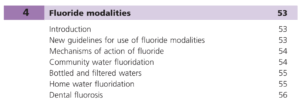
The mechanism of action of fluoride: a balance between demineralization and remineralization
The occurrence of dental caries in children is essentially the result of an imbalance between demineralization and remineralization of dental hard tissues. When cariogenic bacteria metabolize sugars to produce acid, the pH value of the oral environment decreases, calcium and phosphorus ions are lost from the tooth surface, demineralization is dominant, and caries begins to form; When the pH rises, calcium and phosphorus ions in saliva re deposit, and remineralization is dominant, which may reverse early lesions.
The mechanism of action of fluoride revolves around this equilibrium.
The textbook emphasizes that fluoride ions can form a more stable mineral structure on the surface of teeth – fluorapatite, which has a much higher acid resistance than hydroxyapatite, thereby improving the teeth ‘resistance to acidic environments. At the same time, under conditions of sustained low concentration, fluoride can promote remineralization in early demineralized areas, giving early lesions a chance to reverse.
That is to say, fluoride does not simply “reinforce” teeth, but rather pushes the balance towards the “remineralization” side during the dynamic process of dental caries.
Why do pediatric patients need fluoride more?
In pediatric patients, this mechanism holds greater importance.
The reason is that the mineralization degree of deciduous teeth and newly sprouted permanent teeth is relatively low, the crystal structure is relatively unstable, and they are more sensitive to changes in the oral environment. Under the same conditions of caries, the probability of rapid progression of dental tissue lesions in children is much higher than that in adults.
Therefore, the textbook considers fluoride as the most fundamental and stable protective factor in preventing dental caries in children. It is not an optional option, but the starting point for all prevention strategies.
Application strategy: Risk level determines intervention intensity
In specific applications, the book does not unify the treatment of all patients, but explicitly states the need to combine it with risk assessment results.
This is a crucial principle: the intensity of prevention should be adjusted according to the risk level.
Low risk children: mainly rely on daily oral hygiene behaviors to maintain fluoride exposure. Regular use of fluoride toothpaste (twice a day, about the size of a pea each time) is the most basic and effective preventive measure for this group.
Children at medium to high risk: Additional professional interventions are needed in addition to daily use of fluoride toothpaste. This may include higher concentration of fluoride (such as prescription grade sodium fluoride gel, fluoride protective paint), higher frequency of topical application (such as professional fluoride coating every 3-6 months), and more strict diet and behavior guidance.
This differentiated treatment reflects the core concept of the pediatric dental prevention system: not everyone needs the same preventive measures, but everyone needs a prevention intensity that matches their risk level.
Exposure method and frequency: why “daily brushing” is more important than “brushing once a day”
The textbook also points out that the effectiveness of fluoride not only depends on concentration, but is closely related to exposure mode and frequency.
Continuous, low-dose fluoride exposure (such as brushing teeth daily) can create a stable protective environment on the tooth surface, allowing fluoride ions to persist in saliva and plaque, and intervene on-site during demineralization. Therefore, daily brushing behavior plays a fundamental role in the prevention system for children and cannot be replaced by any single intensive treatment.
In contrast, a single high concentration application (such as professional fluorine coating) can provide short-term strengthening effects, but cannot replace long-term stable low concentration exposure. The two are complementary rather than substitutive.
The logic given in the book is very clear: daily fluoride toothpaste is the foundation, while professional fluoride coating is reinforcement. The foundation is unstable, and the reinforcement effect will also be compromised.
Safety issues: dosage and supervision
In the process of children’s application, safety is an unavoidable issue. Due to the incomplete establishment of swallowing control ability in children, excessive intake of fluoride may affect tooth development and lead to fluorosis.
Therefore, the textbook emphasizes in relevant sections that the usage should be controlled according to age and oral hygiene behavior should be completed under parental supervision: children under 3 years old: rice sized fluoride toothpaste, with parental assistance for brushing teeth; Children aged 3-6 years: fluoride toothpaste in the size of peas, parent supervision to spit out foam; Children over 6 years old: can brush their teeth by themselves, but still need regular check ups from their parents.
These are not negligible details, but rather part of a comprehensive prevention strategy. In exams, questions related to “how to use fluoride correctly” are often the starting point for testing whether candidates truly understand the application of fluoride.
From mechanism to strategy: the position of fluoride in the overall prevention system
From the overall structure perspective, the core of this part does not lie in specific products or operating methods, but in establishing a clear logical chain:
The essence of dental caries is the dynamic balance between demineralization and remineralization
The function of fluoride is to promote remineralization and inhibit demineralization
3. The particularity of children lies in their more fragile dental tissues and higher risk
4. The application strategy must match the risk level and emphasize the combination of daily exposure and professional intervention
5. Security management is an essential prerequisite that cannot be ignored
In this logic, fluoride is not an isolated “fluoride application” operation, but a fundamental variable embedded in the caries risk control system. Its usage must be adjusted around individual risk levels and combined with behavior management, dietary control, and regular follow-up to form a complete prevention strategy.
Preparation Inspiration
Reviewing this section again, a noticeable change is the understanding of ‘prevention’. It is no longer an independent knowledge module, but a mainline that runs through the entire patient management process.
In exams, questions related to fluoride are often not directly asked about “what are the effects of fluoride”, but are placed in a specific case for you to judge: what kind of fluoride regimen should this patient use? What is the frequency? How does it correspond to his risk level? What safety issues should be noted?
These questions have answers in the book. But the premise is that you need to first understand the complete logical chain.
Next Preview
The next article is preparing to enter the Behavior Management section of pediatric dentistry. This is the most obvious difference between pediatric dentistry and adult dentistry, and it is also a module that often appears in exams but many people tend to answer incompletely.