
Real Exam Review of HKDLE Part 1 from a Post-Residency Dentist
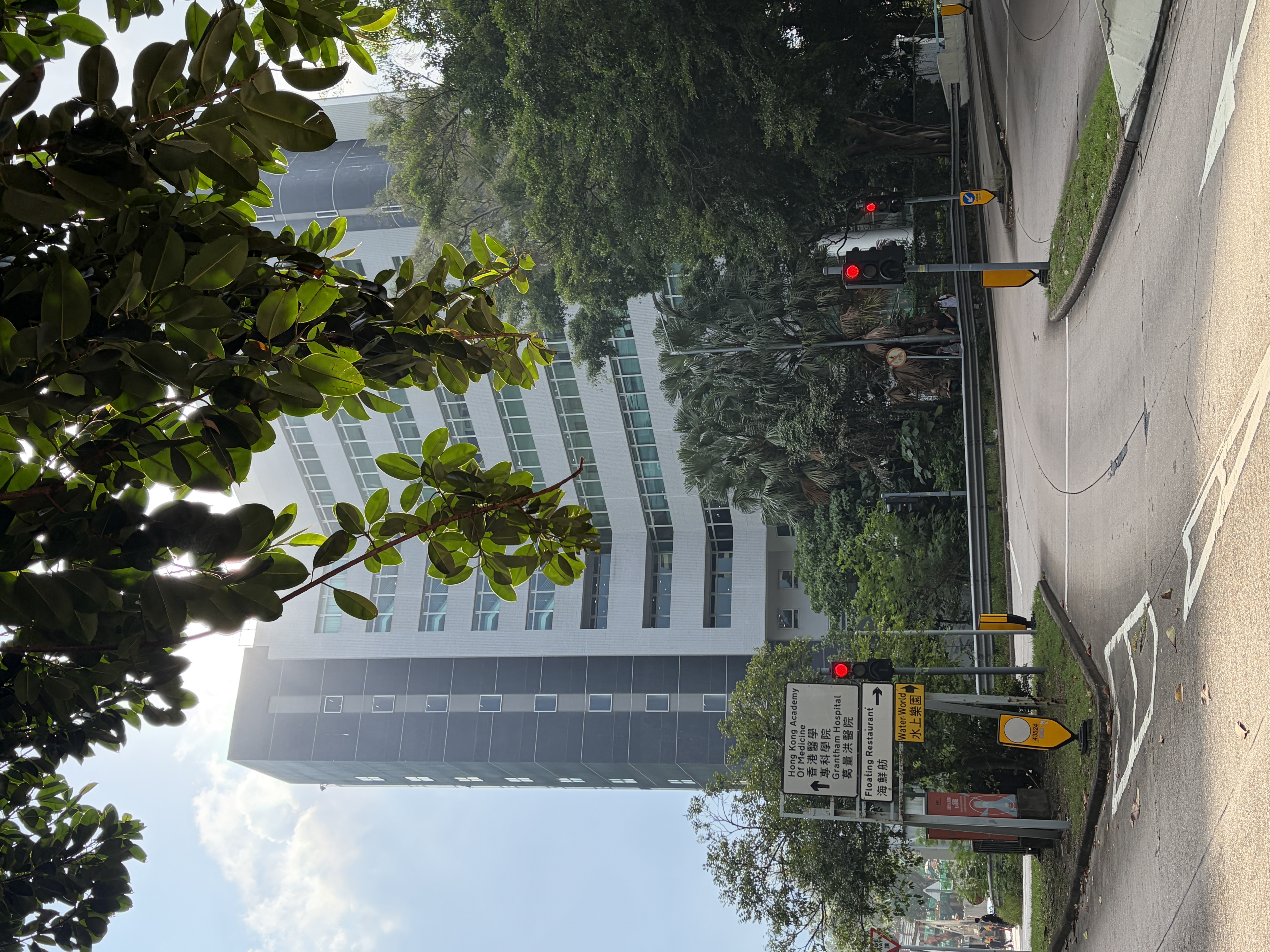
Right after the recent Hong Kong Dental Licensing Examination (HKDLE) Part 1 written test concluded, we interviewed a student from Zency Education who had just walked out of the examination hall.
This doctor holds a bachelor's degree in stomatology and had been working in clinical practice after completing one year of standardized residency training. The very first thing he told us upon walking out of the exam venue was that he felt completely dizzy. For one thing, the exam stretched from 9:00 AM to the early evening, and the air conditioning inside the Hong Kong test center was freezing cold, making it easy to catch a chill under such high pressure. For another, this year's exam questions truly gave him quite a shock. Speaking to the camera, he specifically reminded fellow dentists taking the exam in the future to bring extra warm clothes into the examination hall.
Talking about his preparation journey, he actually went through a period of mental struggle. He told us that back when he had just graduated and was looking for a job last year, he came across Zency Education's courses on Xiaohongshu, but at the time he thought about waiting until his job stabilized. However, after June this year, considering his personal plans and the fact that a friend happened to be taking the exam with him, he finally made up his mind to enroll. In the early stages, he prepared while working full-time; he barely had any free time during the day at the clinic and could only study bit by bit at night. In August, he chose to resign, and from September onwards, he entered a full-time study sprint. During the final two weeks before the exam, he studied unfailingly for five to six, or even seven to eight hours every single day.
Even with such thorough preparation, when discussing the overall difficulty of this sitting, he frankly stated that it was much harder than expected. This difficulty didn't stem from how esoteric the tested clinical details were, but rather from how unconventional and niche the questions were. Many routine details that he considered extremely important and memorized repeatedly during his review were barely tested; instead, the paper featured quite a few unfamiliar medical terms he had never encountered before.
Across all eight tested subjects, he found Paediatric Dentistry and Oral Surgery relatively straightforward and easier to score in than anticipated. However, all three sections of the morning Paper 1 were tough, especially the first part, where the questioning angles were remarkably tricky. Moving on to Paper 2 in the afternoon, Conservative Dentistry remained the toughest nut to crack as always, while the difficulty of Periodontology this year also exceeded his expectations, proving even trickier than Prosthodontics. That said, he also mentioned that despite the many niche questions, he did encounter verbatim past questions that hadn't been altered by a single word—in luckier subjects, he came across four or five of them, which gave him a bit of breathing room during the test.
Additionally, he shared a very real test-taking experience. Although many doctors trained in mainland China work hard to study in English during their daily review, by the later stages of the actual exam, extreme mental fatigue leaves them with no energy to digest lengthy English question stems. He had to rely directly on the Chinese translations, only looking back to cross-reference the original English text when the Chinese phrasing felt logically flawed. This also gave our academic research team a very valuable reminder: in our future Chinese course annotations, we will further align medical terms that differ significantly between the two regions—such as "Diazepam" (known as Dixipan in mainland China vs. Anding in Hong Kong)—more closely with local Hong Kong Traditional Chinese conventions to help ease candidates' reading burden in the exam hall.
Looking back on these past few months of review, the doctor candidly shared with us that for someone like him who isn't naturally the most proactive self-starter, had he not enrolled in this course, he might never have truly taken the first step in preparing for the exam. The official reading list provided by the Dental Council of Hong Kong (DCHK) is simply massive; trying to figure it out entirely on his own would have been like flying blind without knowing where to start, and it would have been impossible to finish reading and memorizing dozens of thick textbooks within a few months. Following Dr. Shuxin's curriculum helped him most by having someone guide him through organizing the vast knowledge framework—once the overarching direction was clear, his review stayed on track without falling into chaos.
Just as this student experienced, facing an HKDLE that covers an increasingly broad scope and features ever more flexible questions, the trial-and-error cost of fighting alone is becoming higher and higher. To help doctors with different educational backgrounds and language habits avoid unnecessary detours, Zhengxi Education has built a comprehensive bilingual (Chinese and English) online curriculum to fully support your journey toward practicing in Hong Kong.
Our Chinese-taught curriculum is led by Dr. Shuxin. Holding bachelor's and master's degrees from Sun Yat-sen University and a PhD from the University of Hong Kong, Dr. Shuxin is both a registered general dental practitioner in Hong Kong and an attending physician in mainland China. She is deeply familiar with the common information gaps and cognitive disconnects that mainland dentists face when transitioning to the Hong Kong licensing exam. Through 60 hours of live classes for Part 1, alongside 10.5 hours for Part 2 Practical and 11 hours for Part 3 Clinical, she guides zero-foundation or transitioning candidates step by step to build a solid framework of knowledge.
Our English-taught curriculum is personally taught by Dr. Suki, a registered practicing dentist in Hong Kong. Having passed the HKDLE herself and also completed the Canadian NDEB assessments, Dr. Suki is well-versed in the clinical and practical requirements of international dental licensing exams. The English track includes 72 hours of intensive lectures for Part 1, as well as 16 hours each for Part 2 and Part 3 targeted breakthroughs—making it ideal for doctors accustomed to preparing entirely in English and looking to align directly with international assessment standards.
To help you focus your limited energy where it matters most, our courseware condenses high-yield exam topics and utilizes AI technology to automatically distill each live class into visual mind maps and second-by-second knowledge checklists, allowing you to pinpoint weak areas effortlessly during your second and third rounds of review. All enrolled students enjoy unlimited replay access to course recordings, continuously updated internal past paper collections and mock question banks, and full-process support from a dedicated group chat service team covering everything from application document verification to daily academic Q&A.
Preparing for the Hong Kong dental licensing exam is never an easy feat, but as long as you find the right direction and build a solid framework, every step of persistence will count. If you are planning to sit for the upcoming HKDLE, or wish to evaluate your eligibility and learn more about our course schedules, feel free to send a direct message to our course consultants anytime. Zhengxi Education is here to walk alongside you steadily until you pass.