

If you didn’t check your phone last night, you might think you’ve entered the wrong scene when you open your WeChat Moments today.
The screen was filled with words like “ma lou”, “you wu”, “FAKE”, “na ni zhe”, and even some people tested as “gou shi ren” and “cao zhe”. This is the SBTI personality test that suddenly exploded all over the internet on the evening of April 9, 2026. The full name is “Silly Big Personality Test”. It is inspired by the MBTI framework, but the results it produces are all a bunch of abstract, self-deprecating, and absurd labels.
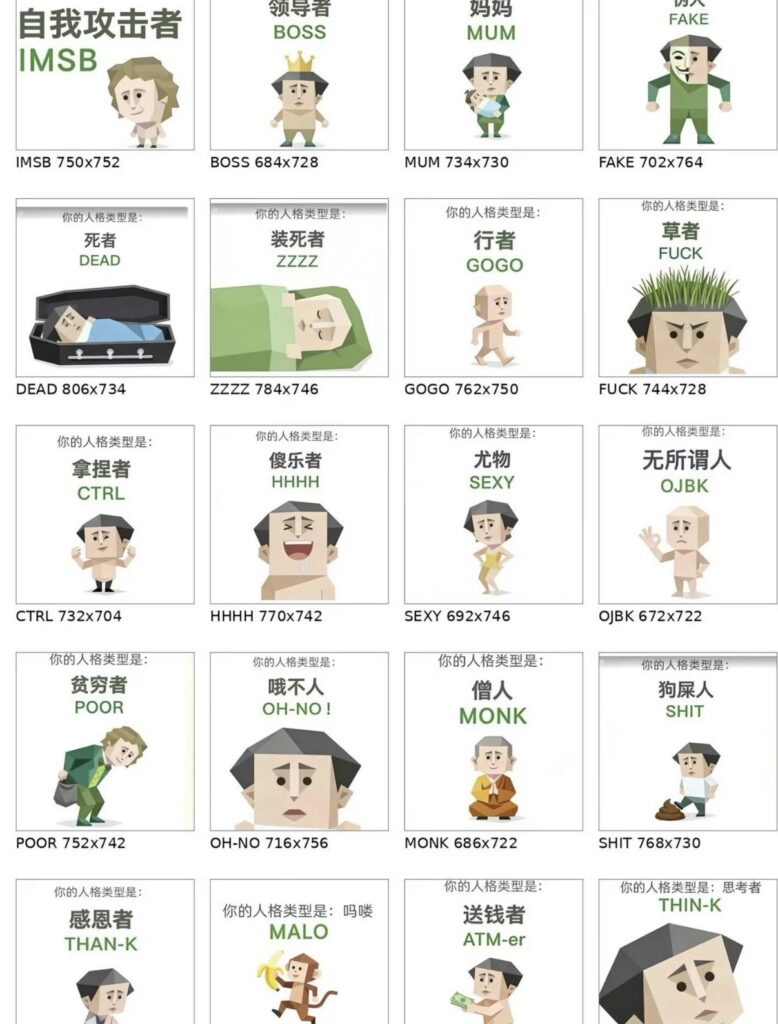
The cause was that a content creator on Bilibili, in an attempt to persuade his friend to quit drinking, casually created a test, which ended up crashing the server. Starting with the slogan “MBTI is out, SBTI is in” trending on social media, this nationwide phenomenon of “cloud meme playing” officially kicked off.
If a customized SBTI were designed specifically for HKDLE candidates, there would likely be only one answer
After reviewing everyone’s test results all night, I suddenly felt that we should design a separate set of exam questions for our colleagues preparing for the Hong Kong dentist license exam.
Don’t ask, because there is only one type of question:
Ctrl+C / Ctrl+V proficiency test
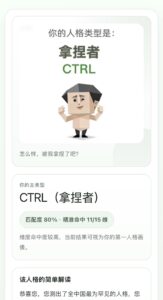
As a dentist preparing for the HKDLE, the two most frequently used key combinations on the computer during the preparation period are to copy knowledge points and paste them into the wrong question booklet, copy official document requirements and paste them into the memo, copy reference book page numbers and paste them into the review schedule… The entire set of operations flows smoothly, and the shortcut keys have long become muscle memory.
What “ma lou”? What “you wu”?
Who am I? I am the master of Ctrl.
From preparing for exams to practicing, those who master the art of control never engage in a battle without preparation
The preparation state of a Ctrl master is like this:
Upon seeing the updated syllabus, I press Ctrl+C to save it into a folder. Upon seeing the key points highlighted by the teacher, I press Ctrl+C to note them down. Upon seeing the analysis of wrong answers, I press Ctrl+C to write them into my review notebook. Copying, organizing, internalizing, and outputting. Each round involves precise grasping of knowledge.
Part 1 covers eight subjects, and one set of shortcut keys can get you through. Part 2 is practical practice, where you practice one case and review one case. Part 3 is clinical interview, where you need to internalize the logical framework of case analysis and then apply it in the exam.
If you’ve mastered the preparation, how can the exam be far behind?
Be your own “controller”, not a label in any test
The label obtained through SBTI is given by others, while the identity of the controller is earned through one’s own efforts.
No matter what label last night’s test labeled you with, today you still have to turn over the books you should turn over, memorize the words you should memorize, and solve every question you should solve. The exam won’t give you extra points just because you are a “stunner”, nor will it deduct points just because you are a “mess”. It only recognizes one thing: how much you have prepared and how much you have mastered.
On our journey of preparing for exams, we don’t need to be defined by any test. What we need to do is to firmly grasp every exam point, every question, and every practice.
On April 19th, CHENGHEI will hold an all-English trial class, with the theme of “Medical Emergency in Dental Office”. If you also want to experience the feeling of being a “Ctrl master”, you are welcome to join us. Please contact us in the background to make an appointment and register!