
Preparation Guide for Part 3 of the Final Stage of the HKDLE
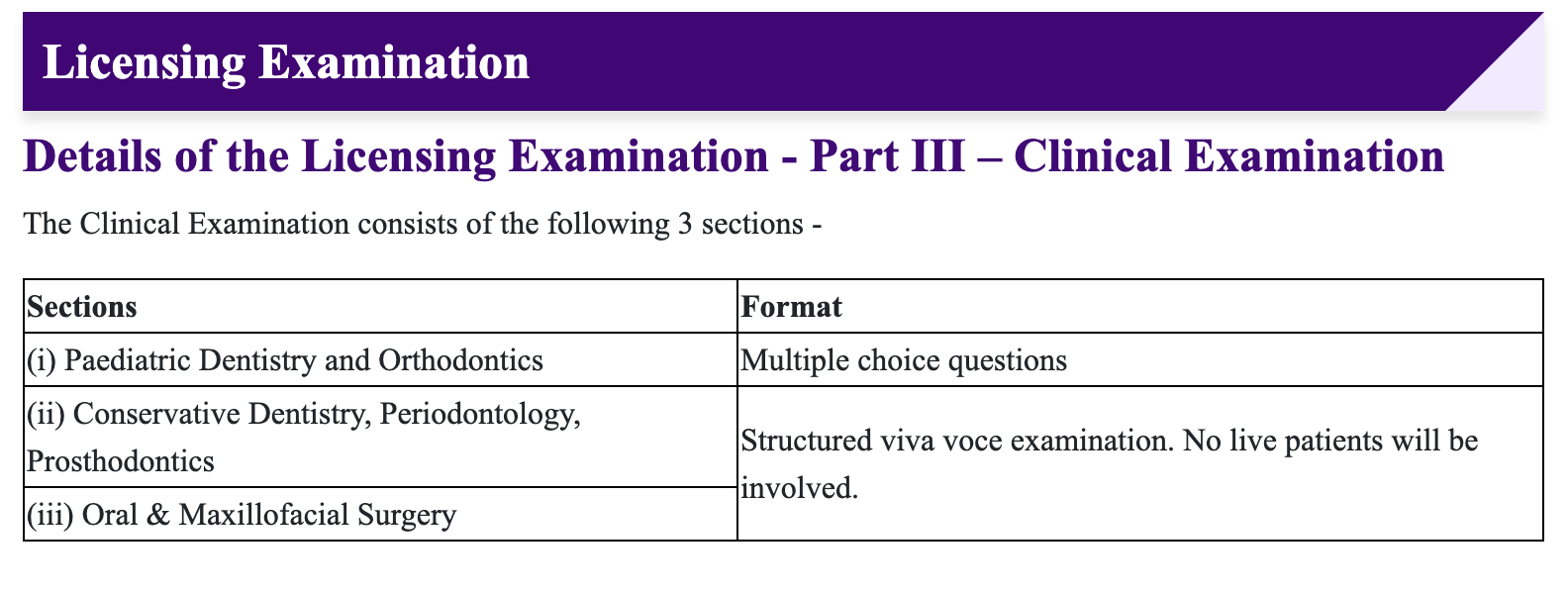
For many dental professionals, the final hurdle of the Hong Kong Dental Licensing Examination(HKDLE) – Part 3 Clinical Examination – is often a challenging journey. This section directly tests the professional judgment and practical ability of doctors in real clinical situations. Today, we will provide a detailed breakdown of the exam structure and assessment focus of Part 3, as well as efficient preparation strategies.
What to test in Part 3: Accurate breakdown of three clinical subjects
The Hong Kong Dental Licensing Examination Part 3 is divided into three clinical subjects, each with its own emphasis on assessment format.
Pediatric Dentistry and Orthodontics
The undergraduate program adopts a multiple-choice written test format, mainly testing candidates’ systematic understanding of dental issues in infants, children, and adolescents, covering core content such as growth and development, preventive treatment, and judgment of corrective indications.
Preservation of Dentistry, Periodontology, and Restoration of Dentistry
This section adopts a combination of case studies and oral exams. Candidates need to answer three types of questions: standard questions, specific case questions, and follow-up questions related to any aspect of the case. This stage requires extremely high coherence and adaptability in clinical thinking. The examiner not only checks whether your diagnosis is correct, but also values whether you can present the treatment logic in an organized manner and maintain clear thinking when questioned.
Oral and Maxillofacial Surgery
The assessment objectives of Part 3 are comprehensive, testing candidates’ ability to apply professional knowledge in clinical situations, especially their mastery of the following five aspects:
Firstly, dental restoration. Secondly, the diagnosis and treatment of periodontal disease patients. Thirdly, provide comprehensive restorative dental treatments. Fourth, surgical treatment of patients. Fifth, diagnosis, treatment planning, and care for infants, children, and adolescents.
These five directions cover a wide range of clinical scenarios and require candidates to possess systematic knowledge reserves and flexible clinical decision-making abilities.
Assessment requirements and preparation difficulties for Part 3
From the exam structure, it can be seen that Part 3 requires candidates to go far beyond memorizing knowledge points. It focuses on testing three core competencies.
The first item is the structured expression of clinical decision-making. Facing a case, you need to clearly state the diagnostic criteria, treatment steps, material selection, and alternative solutions. If the expression is disorganized, even if the professional judgment is correct, it may affect the examiner’s grading judgment.
The second item is the on-site response to follow-up inquiries. In oral exams, examiners will randomly ask questions based on your answers, sometimes involving borderline cases or complications. This requires you to have a deep enough understanding of each case, rather than staying at the surface level of answers.
The third item is the specialized handling ability for children and special populations. Part 3 explicitly requires coverage of diagnosis and care for infants, children, and adolescents, which is often overlooked by candidates but is precisely the key to widening the score gap. From behavior management to treatment strategies, a systematic response plan needs to be developed.
Targeted course training arrangement
We have designed a precise and efficient training course system based on the characteristics and preparation difficulties of Part 3 exams.
Oral and maxillofacial surgery is scheduled to last 5 to 6 hours and will be taught in three sessions. This section covers a wide range of topics, from tooth extraction to complex surgical procedures, all of which require systematic mastery. The pace of the three classes ensures depth while avoiding information overload.
Arrange 3 to 4 hours of lectures on dental preservation, periodontal disease, and restorative dentistry, divided into two sessions. Emphasis will be placed on strengthening the diagnostic logic and treatment planning skills in case studies, while also providing oral training to respond to subsequent inquiries from examiners.
Children’s Dentistry and Orthodontics will be arranged for 2 hours and taught in one session. This section focuses on multiple-choice questions, with the key being to quickly and accurately identify the test points and establish a clear framework for answering multiple-choice questions.
Practical suggestions for exam preparation rhythm
It is recommended that candidates prioritize their review focus on the areas of oral and maxillofacial surgery and restorative dentistry, which have higher scoring weights. OMFS’ 5-6 hour course covers the core points of surgical treatment, while Cons, Perio, and Pros’ 3-4 hour course focuses on practical case oral exams. After connecting these two aspects, focusing on breaking through Pedo and Ortho’s multiple-choice skills will increase efficiency.
There are no shortcuts to the Part 3 exam, but there must be a method. Breaking down the exam syllabus, benchmarking assessment requirements, and strengthening practical expression, every step is taken solidly, and composure in the exam room is a natural outcome. Chenghei Education wishes every dentist who is preparing for the exam to successfully pass this hurdle and start a new chapter in their career in Hong Kong.