
The Most Comprehensive Guide to Avoiding Pitfalls in Applying for the HKDLE
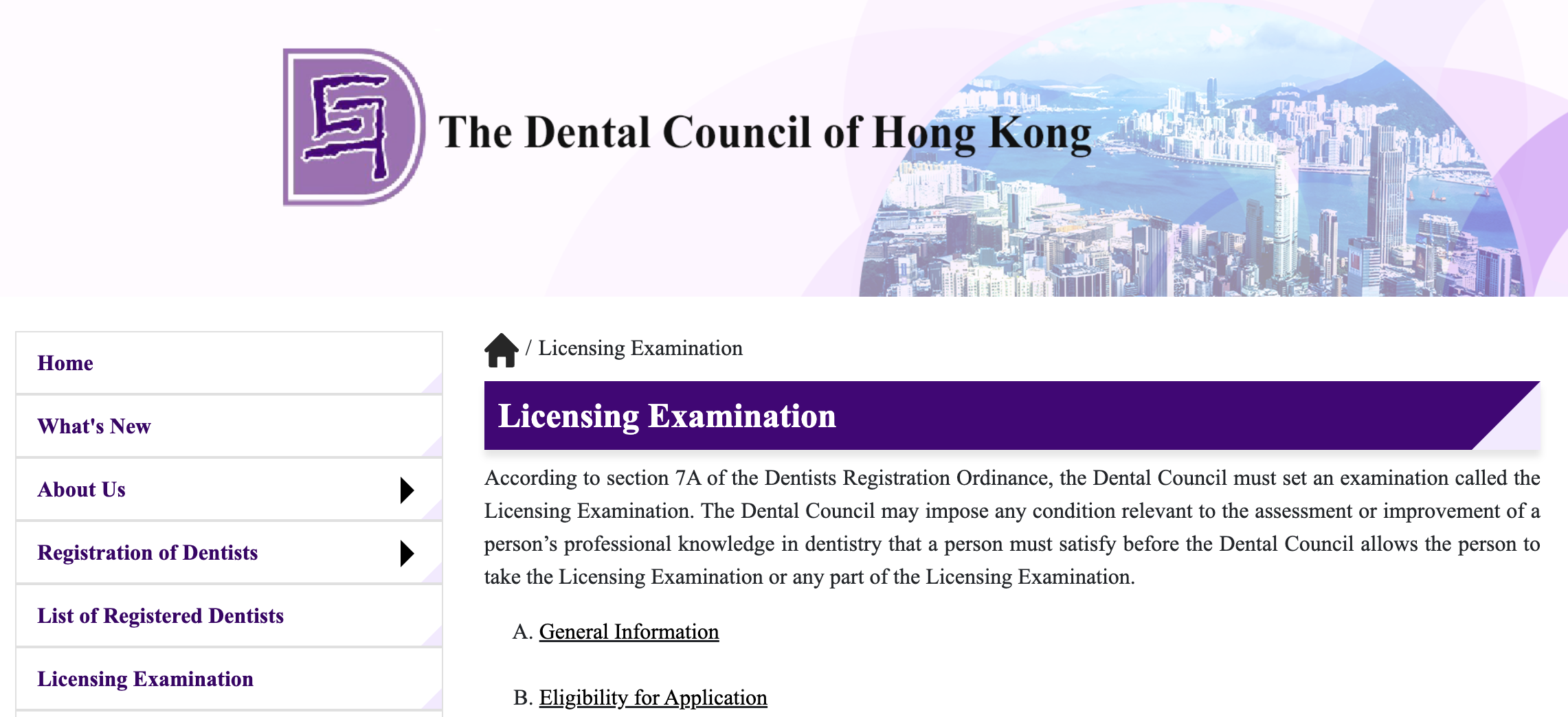
On the path to practicing dentistry in Hong Kong, information asymmetry often poses the greatest barrier. Many candidates, when facing the official requirements of the Dental Council of Hong Kong (DCHK), are prone to missing key milestones due to misinterpretation of details.
We have collated the most essential and mandatory indicators from official information to assist every aspiring dentist in examining their preparation path from the most precise perspective.
Q1: What are the mandatory requirements for applying to HKDLE?
This is the question that everyone is most concerned about. The core threshold for applying is not only academic qualifications, but also the “length of schooling”.
Key requirements: Applicants must have successfully completed no less than 4 years of full-time dental training and hold a dental degree recognized by the committee.
Professional advice: The committee does not have a pre-established “list of eligible dental qualifications”. Each application is individually evaluated by the examination panel under the committee’s jurisdiction. Therefore, it is crucial to ensure that your course description and credit records are clear and complete.
Q2: Can I register for all three parts of the exam at once?
The logic of the exam is strictly progressive, and skipping levels is not allowed.
Path Setting: You must first pass Part 1 (written examination) to be eligible to take Part 2 (practical examination) or Part 3 (clinical examination).
Combined registration: You can only choose to take Part 2 in the same exam after passing Part 1; or you can register for both Part 2 and Part 3 in the same exam.
Q3: What should I pay attention to regarding language and examination mode?
The language logic of HKDLE is completely different from that of mainland exams:
Part 1 (written test): The test paper is bilingual in Chinese and English, accommodating candidates from diverse backgrounds.
Part 2 and Part 3 (Practical and Clinical): Candidates must choose to take the examination in English or Cantonese before the examination.
Key reminder: Once chosen, it cannot be changed during the examination period. This requires candidates to not only enhance their professional English proficiency during the preparation stage, but also ensure proficiency in using medical Cantonese for communication if Cantonese is chosen.
Q4: Is there a more efficient path for exam preparation?
Facing stringent admission criteria and challenging clinical practical requirements, a scientific preparation plan is the key to success.
Core Materials: The “Candidates’ Guide” provided on the official website is a tough nut to crack, as it includes recommended reference books, sample exam questions, and structured simulated clinical interview questions. This forms the foundation.
Preparation strategy: Given that the HKDLE examination encompasses a vast knowledge system and highly specialized practical requirements, it is difficult to establish systematic understanding solely through fragmented reading. Professional course guidance can assist you in more precisely identifying the patterns of questions and specifically strengthening clinical weaknesses, thereby maximizing your chances of passing the examination on the first attempt within a limited review period.
Q5: What details in material preparation will directly lead to failure?
In the material submission process, any “imprecision” may lead to the application being invalidated.
Deadline: No late applications will be accepted for any reason, and there is no room for flexibility.
Good Standing Certificate: It must be issued by your past or current registration authority, and any certificate issued more than three months prior to the application date will be deemed invalid.
Document authentication: All copies of supporting documents must be certified by a Notary Public. Documents certified by other individuals (such as lawyers, justices of the peace) are not accepted.
Suggestions for test takers
Becoming a practicing dentist in Hong Kong involves a rigorous professional qualification process. We always recommend candidates to conduct a rigorous self-assessment based solely on the latest “Candidates’ Guide” published on the DCHK official website.
From the requirements of four years of full-time training to the rigorous document review mechanism, all these rules are aimed at selecting practitioners who truly possess professional qualities.
Preparation suggestions:
Check academic qualifications: Ensure the completeness of your dental degree certification documents.
Language adaptation: If you choose to take the exam in Cantonese, please switch to the Cantonese track for clinical language as soon as possible.
Process control: Pay attention to the officially announced application deadline and reserve sufficient time to handle notarized documents.
If you have further inquiries regarding the aforementioned application details (such as notarization requirements and academic qualification recognition), please feel free to leave a message in the backstage. We will continuously monitor official updates and, leveraging the educational research and teaching experience of CHENGHEI Education, provide you with the most timely interpretation and preparation support.