
Hong Kong Dental Licensing Examination (HKDLE) Advanced: This book on pediatric dental restoration is a must-read for candidates
During the long journey of preparing for the Hong Kong Dental Licensing Examination(HKDLE), the most common pitfall that many dentists fall into is not a lack of effort, but rather a cognitive bias towards the assessment dimensions. The Hong Kong Dental Licensing Examination is a rigorous system. As CHENGHEI Education, which specializes in dental licensing training in Hong Kong, we have found that the common denominator among the vast majority of high-scoring candidates is their ability to deeply understand and internalize a classic textbook, assimilating the standards from the book into their own diagnostic and treatment instincts.
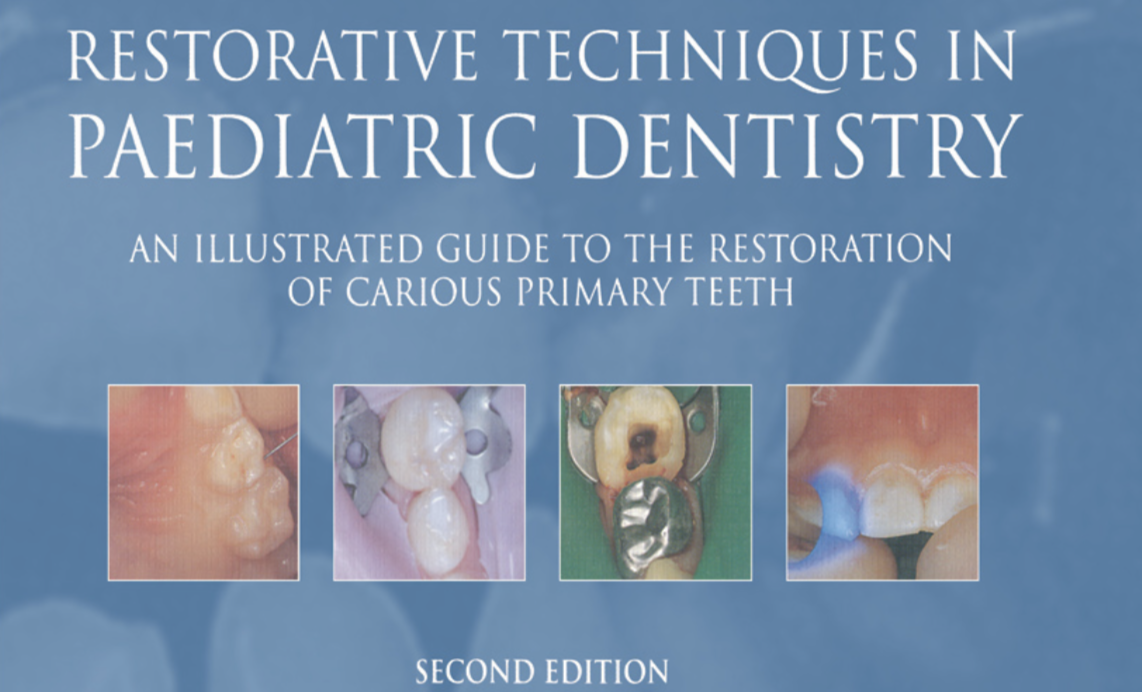
This book, Restorative Techniques in Paediatric Dentistry, compiled by the Faculty of Dentistry at the University of Leeds, is the official recommended textbook for pediatric dentistry.
I. Knowledge framework and depth of thinking: the cornerstone of Part 1 written examination
The Part 1 stage of the Hong Kong Dental Licensing Examination is a comprehensive review of theoretical foundation and breadth of knowledge. This stage is entirely written-based, with no examiner sitting opposite you to observe your clinical performance. However, this does not mean that the written content merely focuses on memorization.
The core of the written examination lies in the comprehensive application ability of dental knowledge. In the field of pediatric dental restoration, the exam questions often revolve around the development patterns of dental caries, the principles of material selection, and the decision-making logic of endodontic treatment. If you merely memorize some fragmented exam highlights, you are highly susceptible to losing points due to the breakdown of logical chains when facing complex situational questions.
This book, Restorative Techniques in Paediatric Dentistry, provides extremely comprehensive theoretical support. It not only tells you how to fill a tooth, but also delves deeper into why it should be done. For example, the book’s analysis of the indications for pulpotomy and the evidence-based medicine argumentation on which restoration plan should be adopted at what depth of caries directly correspond to the high-frequency examination points in the written test regarding the formulation of treatment plans. In preparing for Part 1, you need to build a rigorous knowledge network by studying such classic textbooks. When the questions on the test paper appear, what comes to mind is not isolated knowledge points, but the entire set of pediatric dentistry treatment logic constructed in the book.
II. Clinical Standards and Real-Life Gaming: Part 2 – The Test of Practice
If the Part 1 written examination is a quiet reflection, then the Part 2 practical examination is a direct confrontation with the examiner. In this stage, your every move is under the examiner’s professional scrutiny. The clinical operation assessment not only examines whether your movements are skilled, but also whether you follow the clinically recognized standards in Hong Kong in every aspect of clinical decision-making.
Here, your examiner is not an impersonal exam paper, but an experienced and senior dentist. The criteria they evaluate are precisely the clinical standards advocated in this textbook.
For example, when performing stainless steel crowns (SSCs), the exam not only requires you to position the crown correctly, but also demands that you demonstrate precise control over crimping margins. If your steps are rough and fail to meet the standard of margin fit, even if the crown is ultimately placed, it will be considered an unqualified clinical performance by the examiner. Similarly, in the restoration of strip crowns, from the adjustment of celluloid forms to the restoration of the final polished shape, every step reflects your understanding of anatomical morphology.
These details are also highly valued in the practical section of the Hong Kong Dental Licensing Examination. In the eyes of the examiners, a doctor who can accurately adhere to the textbook specifications is a trustworthy practitioner. If you are accustomed to the simplified approach used in the mainland or specific regions, and are unaware of the internationally accepted standards, these habits often become your points of deduction during the clinical assessment in Part 2.
III. In-depth Technical Analysis: Why This Book Is a Passport to Success
Upon delving deeply into this book, you will discover a wealth of clinical details lurking within, which constitute the core dimensions of examination evaluation.
In pediatric dental restoration, the use of rubber dams is an unavoidable topic. The book provides a detailed account of the usage and clinical significance of the Stokes rubber dam system. Although some procedures may seem cumbersome in fast-paced diagnosis and treatment, in examinations, they represent the bottom line of medical quality. Examiners assess whether you possess rigorous infection control awareness and clinical operation standards by evaluating your standardized use of rubber dams.
Furthermore, the book provides an almost textbook-like description of the anatomical basis of dental preparation and the morphological characteristics of fillings made of different materials. Especially for the restoration techniques of Extensive Carious Primary Teeth, the book demonstrates the differences between successful treatments and failed cases through a large number of clinical case comparisons. For test-takers, these contents are not only about learning knowledge, but also a training of clinical thinking. It continuously strengthens your judgment: what should you do first and what should you do second when facing such a severely carious tooth.
IV. The preparation logic of CHENGHEI Education
As a professional institution dedicated to training for the Hong Kong Dental Licensing Examination, CHENGHEI Education is well aware that the greatest challenge faced by candidates lies not in the lack of textbooks, but in how to transform the static knowledge from textbooks into dynamic performance in the examination room.
In our teaching process, we always adhere to the principle of concretizing and contextualizing clinical principles from textbooks. Because we know that the ultimate goal of the Hong Kong licensing examination is to select doctors who can provide high-quality, standardized dental services to the citizens of Hong Kong.
The journey of preparing for exams is long, but when you have a scientific approach to exam preparation and a professional team to accompany you, this journey becomes clear in purpose and meaningful. CHENGHEI Education is willing to stand shoulder to shoulder with every colleague who harbors dreams, using our solid clinical skills to overcome this hurdle and embrace your professional future.